
Warehouse Safety in Singapore: The WSH Checklist (2026)
The hazards MOM inspectors look for first, the checklist to fix them, and how warehouse safety ties into bizSAFE Level 3.
 By Nachi Leong, Principal Consultant7 min read
Warehouse safety in Singapore comes down to controlling a handful of high-risk hazards: forklifts, racking, working at height, manual handling and fire. These controls help you manage key warehouse risks and prepare for a bizSAFE audit. This guide gives you the inspector's-eye checklist to do it.
On this page
Key takeaways
- Most warehouse incidents in Singapore involve forklifts, falling loads, and working at height.
- The WSH Act makes the occupier and employer legally responsible for a safe workplace.
- A documented risk assessment for each major task is the single most important record.
- Forklift operators must be trained and authorised, and traffic must be separated from people.
- Warehouse safety is the backbone of a bizSAFE Level 3 system, so fixing it twice over is wasted effort.
Why warehouses get flagged first
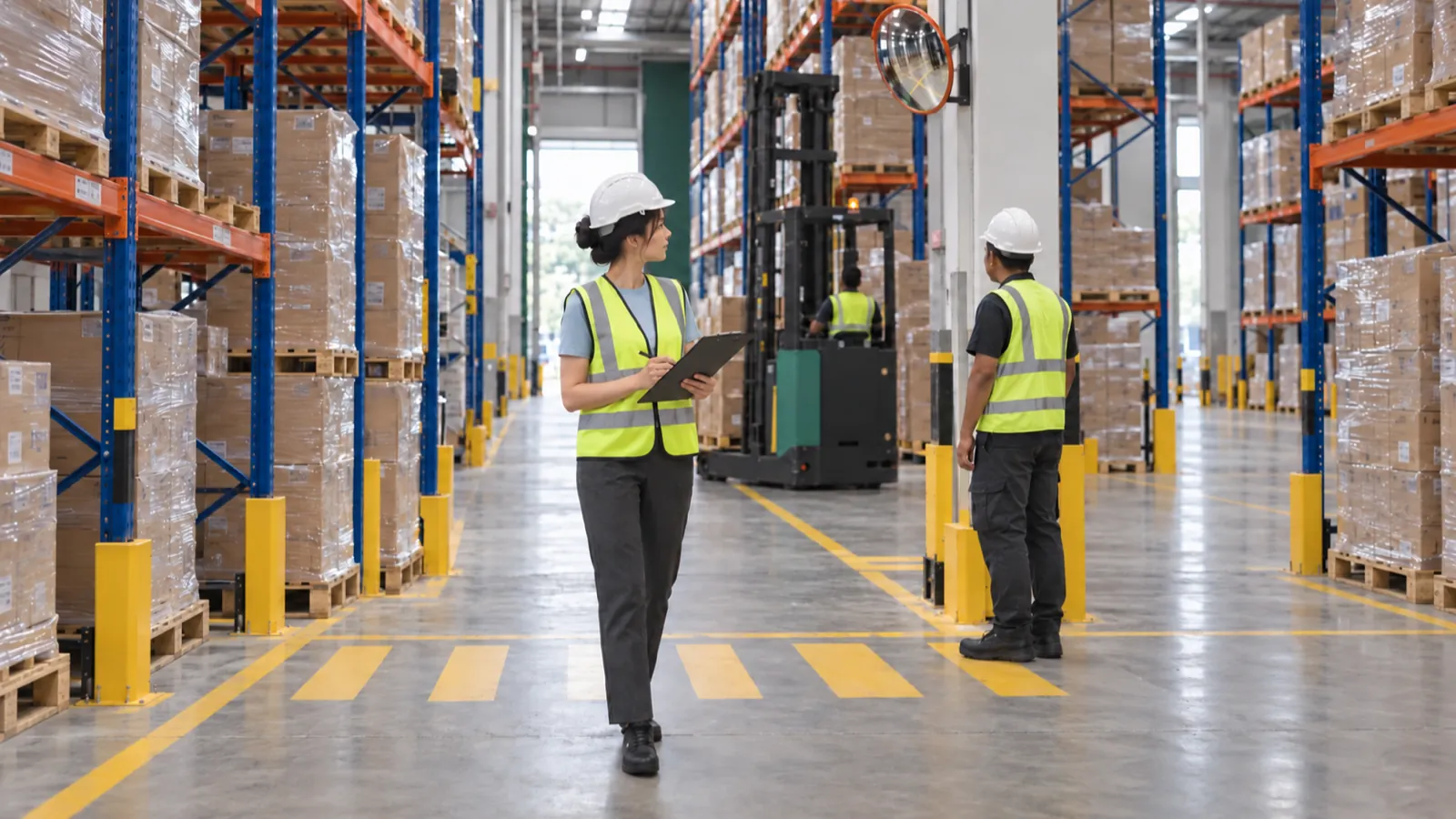
A warehouse packs the three things MOM inspectors worry about most into one space: heavy moving machinery, loads stored above head height, and people on foot in between. That mix is why logistics and storage consistently show up in workplace injury figures. The same controls remove most of the risk and are what a safety auditor checks.
If you store or move goods for a living, getting this right is not optional. Beyond the legal duty, most main contractors and larger clients now ask for bizSAFE Level 3 before they will work with you. The work you do to make the warehouse safe is the same work that earns the certificate.
The top warehouse hazards
- Forklifts and powered trucks: collisions with people, tip-overs, untrained operators.
- Racking and storage: overloaded or damaged racks, falling stock, poor stacking.
- Working at height: picking from high racks, mezzanine edges, unsafe ladder use.
- Manual handling: back and shoulder injuries from lifting and repetitive movement.
- Fire and housekeeping: blocked exits, packaging waste, charging areas for electric trucks.
Each of these needs a written risk assessment naming the hazard, who is at risk, and the controls in place. That risk register is the document an auditor opens first, and the one a court would ask for after an incident. If an accident does happen, see our MOM incident reporting (iReport) guide for the 10-day reporting duty and the risk assessment review that follows.
The warehouse safety checklist
- 01Separate people from forklifts.
Mark pedestrian walkways, fit mirrors at blind corners, and set one-way routes where you can. Keep walkers and trucks apart.
- 02Authorise and train operators.
Only trained, authorised staff drive forklifts. Keep training records and do daily pre-use checks.
- 03Inspect racking.
Load each rack within its rated capacity, display the load notice, and have racks inspected regularly. Tag and isolate damaged uprights.
- 04Control work at height.
Use proper access equipment, guard mezzanine edges, and never let staff climb the racking.
- 05Cut manual handling risk.
Provide trolleys and lifting aids, train safe lifting, and store heavy items at waist height.
- 06Keep exits and housekeeping clear.
Never block fire exits, clear packaging waste, and set a safe charging area for electric trucks.
- 07Write it down.
Keep a risk assessment for each major task, safe work procedures, an incident log and toolbox-meeting records. No records means no proof.
How warehouse safety links to bizSAFE
Everything above is also what a bizSAFE Level 3 audit assesses: a real risk assessment, named controls, trained people, and records that show the system runs day to day. Build the safety system once and let it carry you through the audit.
That is the practical, risk-based approach we take at ZES. You work directly with one consultant from the site walk to audit preparation. See the full bizSAFE Level 3 requirements, or read how to build a risk management plan that passes the audit.
Getting warehouse safety sorted
We can run a site walk-through, write the risk assessments and safe work procedures, and prepare you for the bizSAFE audit. Practical systems that fit how your warehouse actually runs.
Frequently asked questions
What are the legal safety requirements for a warehouse in Singapore?
Under the WSH Act, the occupier and employer must provide a safe workplace, assess risks for each task, control those risks, train workers, and keep records. Forklift operators must be trained and authorised, and racking must be loaded within its rated capacity.
Do warehouse staff need forklift licences?
Forklift operators must be trained and authorised by the employer to operate the truck. Keep the training and authorisation records, and carry out daily pre-use checks on each truck.
How often should warehouse racking be inspected?
Racking should be checked regularly by a competent person, with damaged uprights tagged and isolated immediately. Display the rated load on each rack and never exceed it.
Does my warehouse need bizSAFE certification?
It is not a blanket legal requirement, but most main contractors and larger clients require bizSAFE Level 3 before awarding work. The safety controls you put in place to protect staff are the same ones the certification assesses.
What is the first thing to fix in an unsafe warehouse?
Separate people from forklifts. Marked walkways, blind-corner mirrors and traffic routes remove the highest-consequence hazard first, then work through racking, height and manual handling.
One consultant. From start to finish. The consultant you meet is the consultant who stays with your project.
About Nachi